In Defence of Animal Research
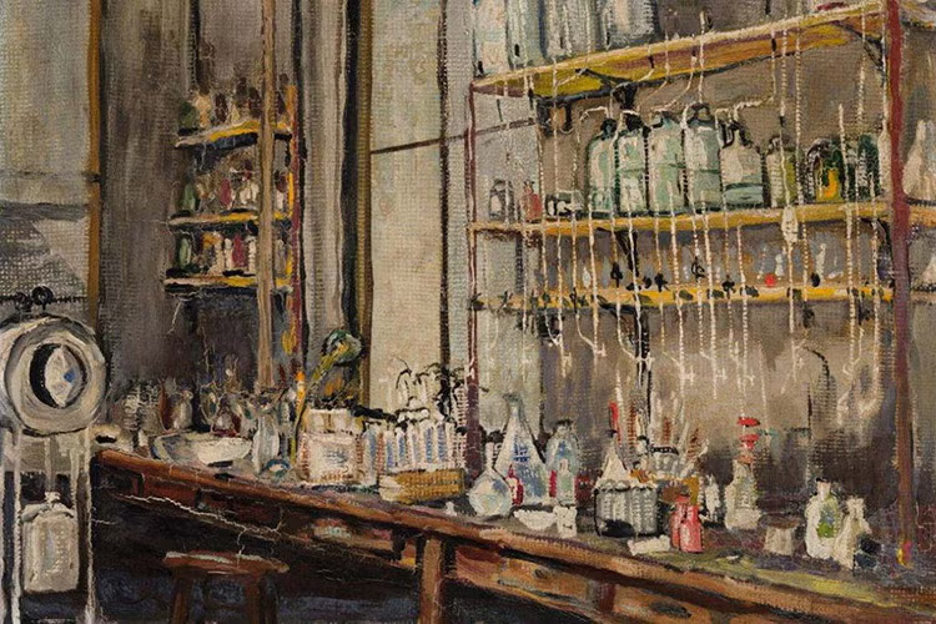
Painting by Sir Frederick Banting: “The Lab”. Obtained from University of Toronto
On August 7th of this year, an investigative piece about an animal research laboratory at St. Joseph’s Hospital in London, Ontario was released. The report - published by the Investigative Journalism Bureau at the University of Toronto - detailed a years-long research program that investigated the causes and treatment of cardiac arrest, using dogs as translational models to study mechanisms that could then inform cardiac medicine in humans.
The article - titled “Puppies secretly tested and killed at Ontario hospital for human heart research” - sparked immediate backlash. In their reporting, the journalists use highly charged language that seeks to paint the research team as malicious. They further include the full names, employment details, and photos of the lead scientists involved in the research study. In all of this, the actual research paradigm, the approval process, and the implications of the results are severely underplayed or undiscussed. The incendiary appeal to emotion provides little scientific context, is irresponsible in its treatment of the investigators, and falls short of good-faith participation in the ongoing debate surrounding ethics in animal research.
There is, however, at least one man who was swayed. Ontario Premier Doug Ford subsequently assured the province of his intent to ban testing on what he referred to as “pet” animals (dogs and cats), noting that scientists should “go with the mice, go with the rats, no problem — but these are pets." The basis for this distinction is difficult to resolve. We know that mice and rats are social animals, experience family bonds, feel empathy for their kin, and are capable of physical and emotional pain. The designation of them as “fit for research purposes” - in ways that cats and dogs are not - seems to be an opinion rooted in human feeling rather than one formed using rational or logical arguments. It appears that this arbitrary distinction between “pet” and “non-pet” animals is rooted in the very anthropocentric speciesism that the animal rights movement is opposed to.
If the original report and the subsequent comments of the Premier drew the ire of the scientific community, these feelings were only exacerbated by the subsequent response by St. Joseph’s Health Care London. SJHC London assured the public that 1) the research team had adhered “to the highest standards of, and [were] in compliance with, all scientific and ethics protocols”; 2) acknowledged that the research had resulted in major strides in human cardiac care; and 3) noted that the use of dogs was necessary, as other effective models for the research don’t exist. However, they immediately capitulated and ceased all research operations, errantly communicating a sense of wrongdoing, and projecting the idea that the empirical pursuit of science will cave - without resistance - to public pressure. Research is the unbiased pursuit of truth and progress: in yielding to fringe public outrage, St. Joseph's Hospital has jeopardized this pursuit within our province. In such times, it is prudent to revisit what animal research is, how it is done, and why it is so important.
In reality, animal research is a domain of incredible oversight, responsibility, and selectivity. All animal research in the country is governed by the Canadian Council on Animal Care, and institutional research is reviewed by and requires approval from an institutional ethics board. These bodies are comprised of many individuals with a diversity of backgrounds and opinions, including animal-based researchers, veterinary staff, and members of the broader community who volunteer to provide a layperson's perspective on the proposed work. Broadly speaking, decisions on ethics in animal research are guided by the “4 R’s of Animal Use in Research”:
Reduction: The use of the minimal number of animals required to achieve desired results.
Refinement: All protocols must minimize the harm and stress placed on the animals, and no unnecessary harm must come to them.
Replacement: Wherever animals can be replaced with lower-order organisms (e.g. fruit flies), or non-living subjects entirely, they must be.
Responsibility: Animals should live in comfort and in dignity with all of their basic needs met (including food, water, and socialization).
Together, these four principles ensure that animal research is conducted in an ethical way that balances care with necessity. Researchers must justify the scientific value of the research question being asked, demonstrate its feasibility, and judge the appropriateness of the chosen animal model. The result is that all research is carefully screened to ensure that the benefits outweigh the costs of the carefully vetted protocols. This is not to say that research never causes harm, but instead that the studies are minimally invasive, only ever impacting the animals in ways that can be scientifically justified.
An important element to address is why higher-order animal research (that is, research using cats, dogs, and other mammals) is important at all - why can’t we test everything on fruit flies or earthworms? First, it is important to note that some animal research is for animals’ sake. Using dogs in a study that seeks to improve dog heartworm treatment is an obvious necessity, with benefits far exceeding costs. For translational research - research in animals that we are conducting to answer questions about human health - scientists DO use the lowest-order animal possible. Research that can be done in fruit flies rather than mice, cats, or dogs IS done in those models. However, different species may share various biological similarities with humans - specific organ systems, comparable behaviour patterns, common brain areas, or similar sensory processes. This array of similarities means that the type of question you are asking determines which species of animal will provide the best response and have the greatest impact on our understanding of human health; we cannot study everything in “lower-order” organisms. The fact is that dogs present the best model for allowing us to study human heart disease, and that every study in this domain has been rigorously evaluated to ensure that the benefits outweigh the costs. We are constantly working to replace animals in our work; refining how work can be done in lower-order organisms, simulating research with computer models, and replacing real animals with synthetic lab-grown organ systems where we can. But while in the future animal research may become increasingly rare and refined, there is no escape from the impact it has had and continues to have on our understanding of human health and our development of life-saving medical breakthroughs.
One way to make clear the enormous effects of animal research is to search through our history for the many breakthroughs that have depended upon this type of work. In the early 1920s, Sir Frederick Banting - a physician and professor first at Western University and then the University of Toronto - first devised an approach to successfully extract insulin from the pancreas of dogs. At the time, type 1 diabetes was akin to a death sentence, with patients sometimes only living weeks after initial diagnosis. The isolation of insulin from animal models eventually rendered diabetes a treatable condition and extended the life of patients after diagnosis by decades. Banting and his collaborators were awarded the Nobel Prize in Physiology and Medicine in 1923, and in 1925 he gave his Nobel Lecture accepting the award. Today, exactly 100 years after his speech, an estimated 200 million people around the world depend on insulin to manage their diabetes. Many of them would not be alive were it not for animal research conducted right here in Ontario.
Indeed, there is a laundry list of life-changing discoveries that would have been rendered impossible without the availability of animal models. Tuberculosis, for example, used to be responsible for nearly ¼ of all deaths that occurred across Europe and North America. Streptomycin - the first treatment for tuberculosis - was discovered in the soil and tested in guinea pigs before being administered to humans. Blood transfusions, which have dramatically increased survival rates during surgery, were refined in dogs in the early 20th century, and have since saved countless human lives. An exhaustive history of the treatments derived from science using animal models would be too long to recount here; but know that hospitals around the world are caring for patients with heart disease, cancer, stroke, dementia, infections, autoimmune diseases, among others with treatments discovered and refined using animal models.
Ultimately, it is very easy to look at a lab doing animal research and say: “this is wrong”. It is much harder to see how the benefits of animal research have transformed our lives. The contribution that science makes to the world can be quiet, but it is not passive or unimportant. The inaccessibility of science to the general public is a major issue at the centre of much outrage towards this research (see also: climate change denial and vaccine hesitancy). The relationship between science and the public is increasingly becoming “us” and “them”, which has slowly eroded the trust that has saved so many lives throughout our shared history.
To remedy this, scientists must become better at communicating their work to lay audiences, and should advocate openly for Open Science initiatives that seek to avoid gatekeeping scientific discovery behind expensive paywalls. Journalists similarly have a responsibility to report science impartially, and objectively. It is a shared failure that when a woman receives a blood transfusion during childbirth, we don’t think about the scientists who worked with dogs to make this possible. When we see that all four major American sports leagues have had players with type 1 diabetes, we don’t stop and consider that this was a Nobel Prize-winning medical miracle. Scientists need a better PR team.
I often wonder how long it would have taken to discover insulin if not for animal research. Years? Decades? Would we still be looking? And in that time, how many tens of millions of human lives would have been lost. Every time we impede scientific discovery, or shutter a lab in response to uninformed backlash, we incur a very real cost. Ultimately, we will have to pay for the progress that we don’t make.