The Dangers of Cannabis on Fetal Health–Are Omega-3s the Cure?

Image Source: OB/GYN Health+
Many people may recall hearing that cannabis, also known as marijuana or weed, is a safe drug, since it has no reported deaths associated with it, and while this may be true, cannabis still poses health risks for many vulnerable individuals. Since its legalization in 2018, cannabis has remained the most used drug in Canada, with over one-third of Canadian adults between the ages of 18-45 having reported trying cannabis at least once in their life. Despite its growing acceptance, research continues to show that prenatal exposure to cannabis can disrupt fetal neurodevelopment, leading to long-term cognitive and emotional impairments.
Cannabis use during pregnancy has become more common, as it can ease pregnancy-related side effects such as morning sickness and nausea. The main psychoactive component of cannabis is Δ9-tetrahydrocannabinol (THC), and it is responsible for producing the “high” sensation associated with cannabis use. THC can travel from the mother’s bloodstream and enter the fetal brain. Once inside, THC hyperactivates cannabinoid receptors that are part of the larger endocannabinoid system (ECS), a system critical for proper brain development.
The ECS relies on signaling molecules called endocannabinoids, which are made from omega-3 and omega-6 polyunsaturated fatty acids. Omega-3 fatty acids, such as DHA and EPA, found predominantly in fatty fish such as salmon, have been shown to have an anti-inflammatory effect, which helps support better brain development and is associated with fewer neurodevelopmental disorders, such as ADHD or autism spectrum disorder. THC, however, has the opposite effect and increases inflammation, dysregulating these neurodevelopmental processes by overactivating the cannabinoid receptors, ultimately reducing their expression. This dysregulation can cause cognitive and emotional problems, including increased anxiety.
Due to the fact that omega-3 fatty acids support the ECS, researchers have been exploring whether maternal dietary omega-3 supplementation during pregnancy can alleviate the harmful effects of prenatal THC exposure. A recent study by Sarikahya et al. (2025) from the Addiction Research Group at the University of Western Ontario examined exactly this question. In their study, pregnant Wistar rats were given THC along with a diet rich in DHA and EPA. Control rats received saline and a standard diet (lacking DHA/EPA). Researchers then analyzed the activity levels of specific brain regions involved in controlling cognition, memory, and in the offspring of the treated rats.
Created in BioRender
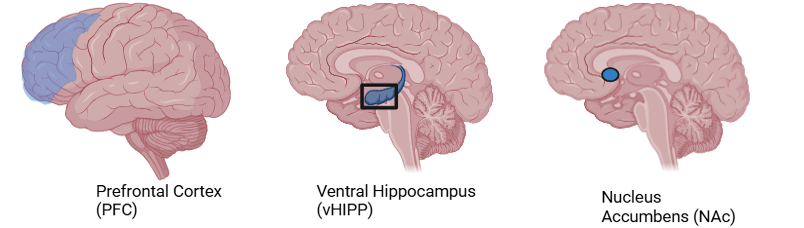
Surprisingly, the results showed that males and females responded differently to the treatments. The prefrontal cortex (PFC) and ventral hippocampus (vHIPP) are two important brain areas that work together and regulate cognition and memory. The male offspring of the THC-treated rats showed increased activity in the prefrontal cortex (PFC) and decreased activity in the ventral hippocampus (vHIPP), while females showcased increased activity in both regions. Altered excitability in these vHIPP-PFC connections may impair memory and cognition. Accordingly, the omega-3 supplementation had sex specific effects as well. In males, the omega-3 supplementation restored the activity balance between these two areas, while females continued to show impairments. This suggests that omega-3 acts differently in males and females, as it did not address these imbalances in the female rats.
The nucleus accumbens (NAc) is an important brain area responsible for controlling anxiety. Similar to before, the THC-treated male offspring showed an increase in signaling to this area, corresponding to increased anxiety. When they were given the omega-3 supplementation, it showed that it prevented these changes from occurring. However, females showed a distinct response, as they were not significantly affected by the THC treatment, Omega-3 supplements, or showed changes to anxiety-related behaviors. This indicates that this region in females may be resistant to environmental factors, such as cannabis exposure.
This study by Sarikahya et al. shows the profound differences between sexes when it comes to prenatal cannabis exposure and the effects of Omega-3 supplementation during pregnancy on the offspring. While cannabis may ease some pregnancy symptoms, it is important to realize that it can interfere with normal development, causing increased anxiety and impaired cognition. The results were promising, as they showed that omega-3 may improve some symptoms in the rat offspring, while uncovering the sex selective nature of omega-3 action, but more research needs to be done. So, unfortunately, as of now, omega-3 supplements will not fully offset the effects of cannabis on your baby’s brain, and instead, the best way to ensure their health is to avoid cannabis altogether while pregnant.
Original Article: Sarikahya, M.H., Cousineau, S.L., De Felice, M. et al. Perinatal omega-3 sex-selectively mitigates neuropsychiatric impacts of prenatal THC in the cortico-striatal-hippocampal circuit. Mol Psychiatry 30, 5264–5282 (2025). https://doi.org/10.1038/s41380-025-03113-x