
Sensitivity to Screen Time: Insights from Western’s Developing Brain
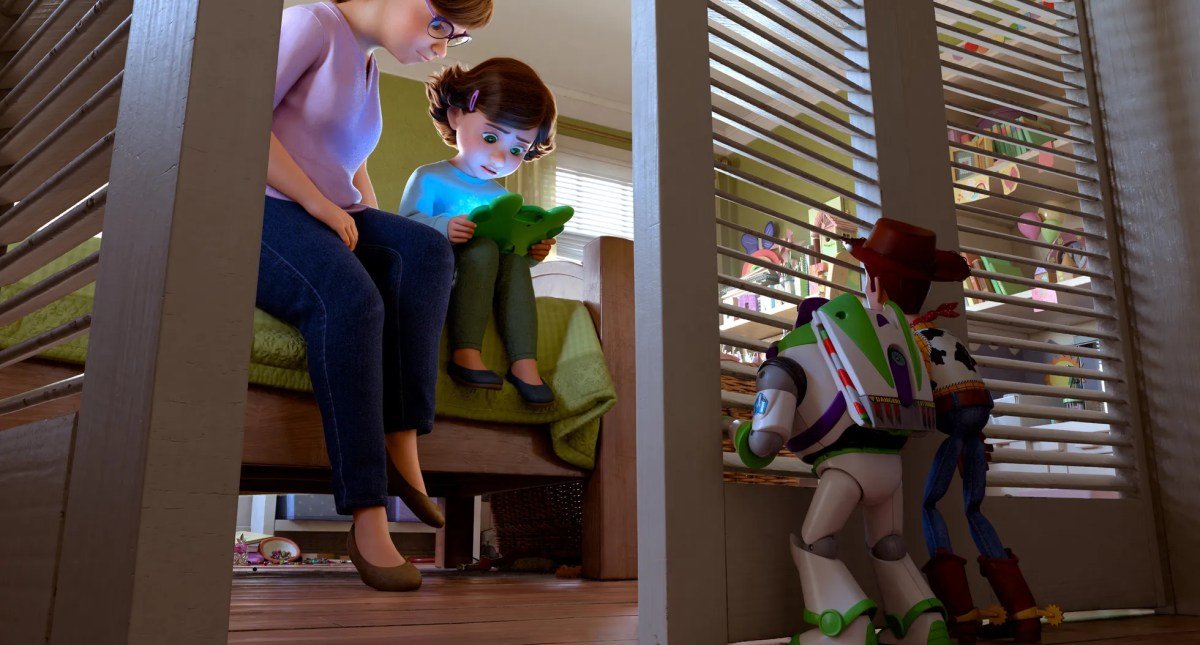
A scene from Disney Pixar’s Toy Story 5. Source: PixarPost.com
Many parents know the dilemma of handing a tablet to a fussy toddler just to buy five minutes of peace. It is a modern struggle so universal that Pixar's recently released Toy Story 5 pits its classic characters directly against the hypnotic pull of childhood screen time. But as youth screen reliance climbs worldwide, the conversation is shifting from a relatable household frustration to a global public health crisis. With landmark regulations in Australia and the UK now banning social media for children under 16, the unregulated wild west era of youth technology appears to be drawing to a close.
For years, Canadian guidelines have relied on a one-size-fits-all approach to screen time regulation, offering parents a rough maximum of daily hours based on a child's age. But Dr. Emma Duerden, an associate professor at Western University and Canada Research Chair in Neuroscience and Learning Disorders, argues that counting minutes is no longer enough. Her research at Western's Developing Brain Lab moves the conversation past generic limits to ask more critical questions: how does screen exposure interact with a child’s unique neurobiological vulnerabilities, and what impact does the type of engagement have as they mature?
In a 2025 study utilizing magnetic resonance imaging (MRI), Dr. Duerden and her team identified a troubling feedback loop in toddlers. Consider a two-year-old with naturally slower language development, a trait correlated with a smaller left pars triangularis, a brain region critical for speech. For this child, reciprocal human communication can be frustrating or simply exhausting. A screen, by contrast, offers an appealing escape: visually stimulating, highly predictable, and demanding zero language output. By retreating from people to devices, the child misses out on the face-to-face human interactions their brain desperately needs to catch up in building its language architecture. This is just what the researchers found: toddlers with smaller language areas and weaker verbal skills at age two were significantly more likely to rely heavily on screens by age three (source). This cycle demonstrates why blanket time limits fail: if a child is already struggling with language development, they are prone to digital reliance regardless of how many hours parents set on a clock.
As children enter adolescence, they become uniquely vulnerable to certain types of screen use. Rapid consumption of short videos or ‘doom scrolling’ puts adolescents at risk due to their neurobiological disposition: their subcortical reward systems (the metaphorical gas pedal) are more reactive, while their prefrontal cortex (the brakes) remains under construction (source). Short-form media platforms exploit this by delivering unpredictable rewards, much like a slot machine. This constant dopamine release can cause the brain to compensate by downregulating its chemical sensitivity, as seen in addiction pathways (source). Consequently, slower, real-world activities like reading or classroom engagement may begin to feel unrewarding and muted (source). Dr Duerden also suggests that depletion in other reward-based brain chemicals (e.g., serotonin) could cause imbalances that mediate aggressive behaviour in youth.
These neurochemical shifts are not just theoretical; they translate directly into measurable clinical outcomes that vary based on the type of media they consume. In Dr. Duerden's 2025 study on hundreds of teenagers, those who spent more than two hours a day on screens on weekdays were twice as likely to show clinically elevated anxiety and had quadruple the odds of behavioural and emotional dysregulation. Importantly, even if two teenagers have the same screen time, if one is scrolling through short-form media and the other is actively engaged in an activity, the passive scroller is at a significantly higher risk of poor mental health outcomes (source).
Behavioural risks run even deeper for neurodiverse children. A 2026 study from Dr. Duerden found that children with autism are 88% more likely to exceed screen time guidelines. For these children, heavy screen use is strongly linked to a loss of impulse control, making it much harder for them to pause before acting (source). This further highlights why a single screen-time rule can't work for everyone. The exact same hour spent on a device may trigger significantly more emotional dysregulation in a neurodiverse child than in a neurotypical one.
Ultimately, Dr. Duerden’s research illuminates that blanket rules are failing the children who are biologically most sensitive to screens. So, what is the pragmatic solution? In a recent panel publicized by the Toronto Star and Brain Canada, Dr. Duerden and her colleagues advocated for a smarter, evidence-based approach: one that integrates digital literacy into school curricula, funds screen-life balance programs, and adopts robust regulatory frameworks modeled on recent UK and Australian restrictions.
At home, parents can bridge the gap by shifting from monitoring time to monitoring engagement. The Canadian Paediatric Society suggests prioritizing "co-viewing", which involves watching and discussing content together to preserve the reciprocal human interaction essential for language development. For adolescents, the goal is to break the dopamine loop. Simple, firm boundaries, such as keeping phones out of bedrooms overnight, allow an overstimulated reward system to reset, fostering the offline self-regulation that modern teens desperately need. More resources are available through the Canadian Paediatric Society.