
Why Can’t I Sleep?
It’s 2 AM and you’re staring at the ceiling in defeat. Is it stress? Caffeine? Maybe. But have you considered the possibility that the answer may lie in your biology?
When Dr. Siobhan Woods was a medical student at the Schulich School of Medicine and Dentistry, she noticed an interesting trend: older women seemed to be at an elevated risk of sleep disturbances, but there was relatively little research focused specifically on women. Woods had previously experienced female data being excluded from a research project, a practice historically used to avoid accounting for biological factors, such as hormone cycles, and simplify analyses. She recognized the same pattern appearing again and decided to investigate it. In an interview with The Dorsal Column, Woods emphasized:
“A lot of aspects of medicine and health have come purely from male data. They’re on a baseline but I think it’s important that women are studied. Women are not like men, we have different physiologies, body compositions, hormone cycles. We go through these critical life transitions that men don’t. Pregnancy, lactation, and menopause are all stressors to the body, change our sleep quality and needs, and are exclusively female, biologically speaking.”
This sparked a review of the existing Canadian literature on women’s sleep, ranging from sleep duration studies to research on social influences. Published in the 2025 Issue of Women’s Health, the review brought together evidence from 55 studies to explore whether these uniquely female life transitions influence sleep. Spoiler alert: they do.
How Women’s Sleep Changes Throughout Life
Taken together, the reviewed studies highlight that each stage across a woman’s life brings unique barriers to a good night’s rest (Figure 1).
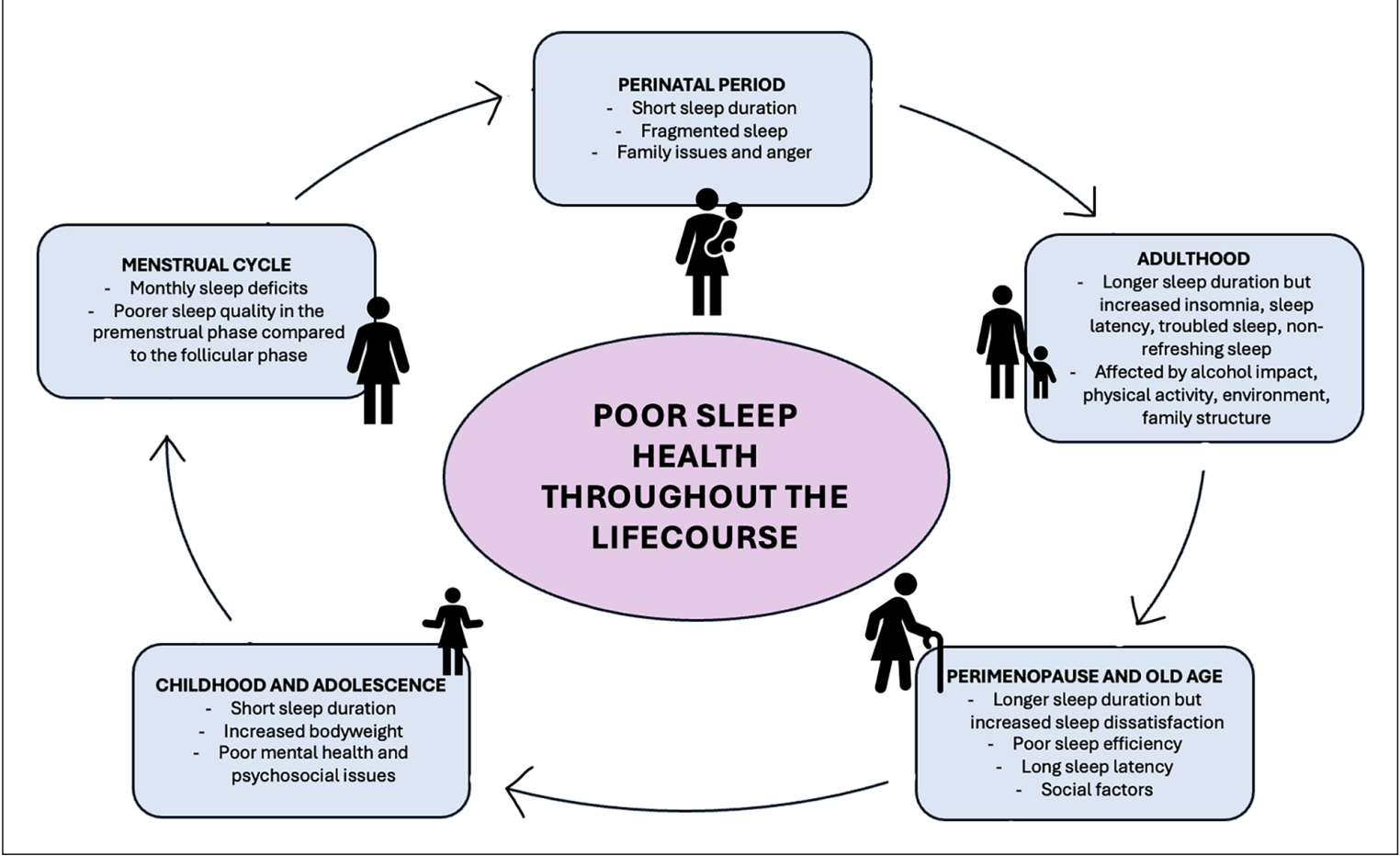
Figure 1: Diagram from the review summarizing how women’s sleep is influenced across major life periods.
Childhood/ Adolescence
Sleep supports brain development, making childhood one of the most important times to establish healthy habits. The review linked regular physical activity and nutritious eating with better sleep. These behaviours carry into adulthood, supporting both sleep and overall health for years to come. Building this foundation may be especially important for girls, who tended to sleep less and experienced a greater decline in sleep during adolescence.
Menstruation
Hormone levels fluctuate across the menstrual cycle, and sleep can vary across its different phases. The review found that sleep often worsens during the premenstrual (luteal) phase of the menstrual cycle. However, findings weren’t universal, with premenstrual symptom severity associated with decreased sleep quality. Menstrual symptoms vary widely between women, and the way they impact sleep is seemingly no exception.
Pregnancy/ Postpartum
Pregnancy places greater demands on the body, yet women often get less sleep when they need it most. Sleep disturbances increased from the second to third trimester and were linked to physical and mental health complications. Although sleep tended to improve after birth, it remained fragmented as new mothers woke frequently to care for their infants. Furthermore, mothers experienced fewer consecutive hours of sleep, compared with fathers.
Menopause
As we age, there is a shift towards longer sleep in general. However, women were more likely to report dissatisfaction with their sleep than men of the same age. Hormonal changes during menopause can contribute to symptoms such as hot flashes, night sweats, and frequent trips to the bathroom. However, the largest contributor to sleep difficulties post-menopause was poor sleep earlier in life, driving home the idea that sleep patterns established early in life can persist into later adulthood.
Sleep is More Than Biology
When reflecting on these results, it wasn’t just one finding that surprised Woods the most, but “the heterogeneity, it took me aback”. Sleep isn’t just one-size-fits-all. While biology plays an important role, everyday factors, such as income, education, employment, and culture also influence sleep. This means two women at the same stage of life could have very different experiences.
Woods admitted this was something she had not originally considered. “I thought sleep’s sleep,” she explained. “I hadn’t thought about how sleep might differ. But clearly, it does”. Woods’ comment highlights how easy it is to think of sleep as a universal experience. However, the review suggested that this widely held assumption may have created a gap in our understanding. Consequently, the research surrounding how social and environmental factors fit into this puzzle is relatively understudied and deserves more attention.
The Takeaway
When asked what she hoped women would take away from the research, Woods stated:
“I hope women can take away that they are different from men and shouldn’t expect to feel rested just because they’re getting the same amount of sleep. It’s the acknowledgement that we shouldn’t expect to be the same as our brothers, husbands, friends, just because our sleep duration, social position, or season of life may be the same. I think when we go back historically, making those assumptions that men and women are equivalent is what led to centuries of disparities and a lack of women-focused research.”
Although this review answered important questions, it also highlighted how much remains unknown. Woods hopes future research will continue to explore these female life transitions, such as pregnancy, postpartum, and menopause, while also considering how socioeconomic factors shape sleep habits. Only by moving beyond assumptions of equivalence between men and women, and considering both biology and lived experiences, can we paint a more complete picture of women’s sleep.
So, the next time you’re staring at the ceiling, counting sheep or all the things you have to do tomorrow, remember that it’s not just you. Women’s sleep is shaped by unique life transitions and lived experiences, and science is finally beginning to study both.
Original Article: Woods, S. E., Nistor, P., Anderson, K. K., & Stranges, S. (2025a). Sleep patterns of Canadian women across the life course: A systematic review. Women’s Health, 21. https://doi.org/10.1177/17455057251367141